
Whole-House Water Filtration vs. Point-of-Use Filters: Which Is Better?
For Scottsdale homeowners, choosing a water filtration system is not simply a question of whether filtered water is better. The bigger question is where you want treatment to happen. Do you want to address water throughout the home, or focus treatment at the kitchen sink and other specific fixtures?
Quick answer: Whole-house water filtration is generally better when you want to treat water at multiple fixtures and reduce certain unwanted substances before water travels throughout the home. Point-of-use filters are often better when your main concern is drinking and cooking water at one location. In many Scottsdale homes, the most practical solution may involve combining treatment methods based on the household’s water quality concerns and goals.
What local readers should know
-
Whole-house systems treat water as it enters the home, while point-of-use filters treat water at an individual fixture.
-
Scottsdale’s water contains naturally occurring minerals that contribute to significant water hardness, although hardness itself is not considered a health concern.
-
The City of Scottsdale reports that about 90 percent of its drinking water comes from Central Arizona Project and Salt River Project surface-water sources.
-
Filtration and water softening solve different problems, so a filter should not automatically be expected to eliminate hardness.
-
Homes from Old Town and McCormick Ranch to North Scottsdale can have different treatment priorities based on water characteristics, plumbing, fixtures, and household preferences.
Why Does the Choice Between Whole-House and Point-of-Use Filtration Matter in Scottsdale?
The choice matters in Scottsdale because local homeowners commonly deal with hard water while also having individual preferences about drinking-water taste, odor, and filtration. Selecting the right treatment location helps avoid paying for a system that addresses the wrong problem or treats far more water than necessary.
Scottsdale Water explains that calcium and magnesium enter the water naturally as surface water travels to treatment facilities and groundwater moves through the aquifer. Those minerals make the water hard. The city’s 2026 Water Quality Report lists approximate hardness of 13 to 17 grains per gallon across much of the community, depending on location.
Hardness is important to this discussion because homeowners sometimes use “filtration” and “softening” interchangeably. They are not the same.
At WES Water, we help homeowners evaluate what they actually want to change about their water before selecting treatment equipment. That distinction can make the difference between an effective system and one that does not address the homeowner’s primary concern.
What Does Local Water Data Tell Scottsdale Homeowners?
Local water data shows that Scottsdale’s municipal water meets drinking-water standards while still containing minerals and trace substances that can influence household treatment preferences. The city’s testing and treatment happen before water reaches the property, while residential systems provide additional treatment selected by the homeowner.
Scottsdale Water reports that it performs regular testing to ensure drinking water meets or surpasses applicable EPA standards. The utility also notes that treatment and disinfection can leave traces of minerals and other chemicals in the water residents use every day.
The city’s 2026 report provides these approximate hardness ranges:
-
South of Indian School Road: 13 to 15 grains per gallon
-
Indian School Road to Chaparral Road: 13 to 17 grains per gallon
-
North of Chaparral Road: 13 to 17 grains per gallon
Scottsdale Water states that hardness is not a primary water-quality standard and is not considered a health concern.
For homeowners, that means water treatment should be selected according to the specific result desired rather than assuming municipal water is unsafe.
How Does the Type of Filter Affect a Local Home?
The type of filter determines which fixtures receive treated water and therefore affects convenience, maintenance, water characteristics, and overall system scope. A whole-house system works upstream of individual fixtures, while point-of-use equipment concentrates treatment where a household needs it most.
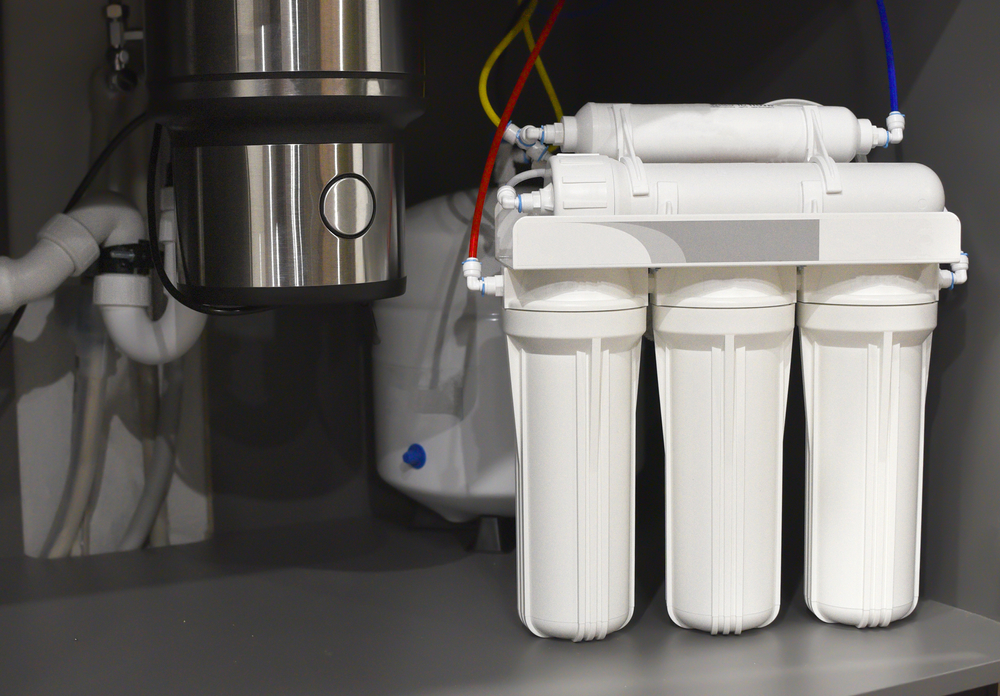
A point-of-use system under the kitchen sink, for example, can provide treated water for drinking and cooking without treating showers, bathroom faucets, or other fixtures.
A whole-house system takes a broader approach. Depending on the equipment and media selected, water is treated before being distributed through the home’s plumbing.
For larger homes in areas such as DC Ranch, Gainey Ranch, McCormick Ranch, and Troon, the number of occupants, bathrooms, fixtures, and simultaneous water demands can also influence system selection.
What Are Signs You May Need More Than a Basic Point-of-Use Filter?
You may need broader water treatment when your concerns appear at multiple fixtures rather than only in the water you drink. A countertop or under-sink filter can be useful for one faucet, but it cannot change water conditions throughout the rest of the plumbing system.
Signs worth evaluating include:
-
You dislike the taste or odor of water from multiple faucets.
-
You want filtered water available beyond the kitchen sink.
-
Different household members regularly use several drinking-water locations.
-
You see mineral residue around faucets, shower glass, or fixtures.
-
You are replacing filter cartridges unusually often.
-
You want to address specific substances throughout the home.
-
You are relying heavily on bottled water because you dislike tap-water characteristics.
Mineral deposits deserve special attention. If hardness is the primary issue, filtration alone may not provide the result you expect.
When Should You Call a Water Treatment Professional?
A professional evaluation makes sense when you are unsure what is in your water, which treatment technology addresses it, or how to size equipment for your household. Homeowners can monitor taste, odor, visible residue, and existing filter performance, but treatment decisions should be based on the actual water concern.
This is particularly useful when comparing filtration with softening or reverse osmosis.
A professional can help determine whether your goal is to address hardness minerals, chlorine-related taste or odor, particular contaminants, drinking-water preferences, or several issues at once. System capacity and flow requirements also matter when treatment serves an entire property.
What Common Local Water Conditions Influence the Decision?
Hardness, source-water characteristics, disinfection, and household water use are among the local factors that can influence filtration decisions. Scottsdale receives water from multiple sources, and homeowners should choose equipment around the conditions at their property and the results they want.
1. Hard water
Hardness is one of the most noticeable local water characteristics. Calcium and magnesium can contribute to mineral residue, but removing hardness typically requires a treatment method designed specifically for that purpose.
2. Chlorine
Scottsdale uses chlorine for disinfection and carefully controls its levels. The city notes that some people are more sensitive to chlorine odor than others. A homeowner primarily concerned about taste or odor may therefore have different needs than someone concerned about hardness.
3. Multiple water sources
About two-thirds of the city’s supply comes from the Central Arizona Project, with the Salt River Project supplying another significant portion and groundwater contributing to the overall portfolio. Source and treatment characteristics can influence the water delivered to different parts of the system.
4. Household usage
A couple in a smaller South Scottsdale property may have very different treatment requirements from a large family in a multi-bathroom North Scottsdale home. Whole-house equipment needs to accommodate actual household demand.
How Should Homeowners Maintain Water Filtration Systems?
Water filtration systems should be maintained according to the equipment, incoming water conditions, household consumption, and manufacturer requirements. Timely filter or media maintenance helps prevent reduced performance and avoids expecting an overdue filter to continue delivering its intended treatment.
Homeowners can safely watch for changes in taste, odor, water flow, and visible filter condition where applicable. Keep records of filter changes instead of relying on memory.
Before the hottest months and after extended travel are also sensible times to check equipment, particularly if a property has been vacant or water usage has changed.
DIY maintenance should stop when work requires altering plumbing, diagnosing pressure problems, servicing unfamiliar treatment components, or determining whether a system is correctly sized.
What Results Can You Expect From Whole-House and Point-of-Use Filtration?
A properly selected system should improve the specific water characteristics it was designed to address, but no single filtration method solves every water-quality concern. Point-of-use treatment can provide targeted drinking water, while whole-house equipment can provide treatment across multiple fixtures.
For example, an under-sink reverse osmosis system can be selected for drinking and cooking water without treating every gallon entering the property. A whole-house filter can instead address certain concerns before water reaches individual fixtures.
If hard water is the main concern, homeowners should evaluate water softening rather than assuming a whole-house filter will remove calcium and magnesium.
What Mistakes Do Scottsdale Homeowners Make When Choosing Filtration?
The most common mistakes come from choosing equipment before identifying the actual water problem. Matching treatment technology to the desired outcome is more useful than buying a system because it is marketed as comprehensive.
Mistake: Treating hardness as a filtration problem.
Consequence: Mineral-related issues may remain even after installing a filter.
Better approach: Determine whether softening, filtration, or both are appropriate.
Mistake: Treating the entire house when only drinking water is the concern.
Consequence: You may purchase more equipment than your goals require.
Better approach: Consider point-of-use treatment for targeted drinking and cooking needs.
Mistake: Choosing a small filter for a whole-home concern.
Consequence: Water at showers and other fixtures remains untreated.
Better approach: Evaluate treatment at the home’s main water supply.
Mistake: Ignoring flow requirements.
Consequence: Poorly sized equipment can affect performance when several fixtures operate simultaneously.
Better approach: Size whole-house treatment around the property’s actual demand.
What Is a Common Local Filtration Scenario?
A common local scenario is a homeowner who notices mineral residue but also wants better-tasting drinking water from the kitchen. These are two separate goals and may require different treatment technologies rather than one generic filter.
Imagine a family near McDowell Mountain Ranch noticing spotting on shower glass and mineral deposits around fixtures. They also prefer additional treatment for drinking and cooking water.
A point-of-use drinking-water system may address their kitchen-water preferences, but it should not be expected to solve hardness throughout the property. Depending on their goals, a broader treatment plan could include separate technologies for separate jobs.
This is a representative scenario, not a WES Water customer case study.
Which Water Treatment Services Can Address These Problems?
The right water treatment solution depends on whether the goal is targeted drinking-water filtration, whole-home filtration, hardness treatment, or a combination of those needs. Evaluating each concern separately helps homeowners avoid unnecessary equipment while addressing the issues that matter to them.
Potential solutions can include point-of-use filtration, reverse osmosis, whole-house filtration, and water softening. The appropriate configuration depends on the property’s water conditions and the homeowner’s goals.
Whole-House Water Filtration vs. Point-of-Use Filters: How Do They Compare?
Whole-house filtration offers broader coverage, while point-of-use filtration offers more targeted treatment with less need to process water used throughout the property. Neither is automatically better for every household.
| Consideration | Whole-House Filtration | Point-of-Use Filtration |
|---|---|---|
| Treatment location | Main water supply | Individual fixture |
| Coverage | Multiple indoor fixtures | One selected location |
| Best suited for | Concerns affecting water throughout the home | Drinking and cooking water |
| Equipment scope | Larger | Smaller |
| Flow requirements | Must accommodate household demand | Limited to individual fixture |
| Hardness removal | Only if specifically designed for it | Generally not the primary purpose |
| Maintenance | Depends on system and media | Typically filter or membrane service |
For some households, the better answer is not choosing one over the other. A combination can provide broad treatment where useful and more specialized treatment at the drinking-water tap.
Where Does WES Water Serve Local Homeowners?
WES Water serves homeowners in Scottsdale, AZ, with water treatment solutions selected around household needs and local water conditions. For nearby communities or specific service boundaries, confirm availability when scheduling.
Homes across Maricopa County can have different water sources and treatment conditions, so recommendations for neighboring areas should be based on the property’s actual supply rather than assuming every community receives identical water.
What Can Happen If You Choose the Wrong Water Treatment Approach?
Choosing the wrong treatment approach can leave the original problem unresolved while adding unnecessary equipment and maintenance costs. A filter designed for taste and odor should not be expected to perform the job of a softener, just as an under-sink system cannot treat shower water.
Waiting can also mean continuing to buy bottled water, repeatedly cleaning mineral residue, or replacing cartridges without understanding why performance seems disappointing.
The better approach is to identify the concern first, then select technology that is designed to address it.
FAQ About Water Filtration in Scottsdale
Is whole-house water filtration worth it in Scottsdale?
Whole-house filtration can be worthwhile when you want to address specific water characteristics at multiple fixtures throughout your home. It may be unnecessary if your only goal is additional treatment for drinking and cooking water. Because local water is notably hard, also determine whether your concern requires filtration, softening, or both.
Is a point-of-use filter enough for Scottsdale tap water?
A point-of-use filter can be enough when your goal is targeted treatment of drinking or cooking water at a particular faucet. Scottsdale Water states that municipal water is treated and monitored to meet applicable drinking-water standards, so residential filtration is generally about specific household preferences or treatment goals rather than replacing municipal treatment.
Does a whole-house filter soften hard water?
A whole-house filter does not necessarily soften hard water because filtration and softening are different treatment processes. Scottsdale’s 2026 Water Quality Report lists hardness at approximately 13 to 17 grains per gallon depending on location, so homeowners concerned about calcium and magnesium should evaluate equipment specifically designed for hardness reduction.
Why does Scottsdale water sometimes smell like chlorine?
A chlorine odor can occur because Scottsdale uses chlorine to disinfect drinking water and control microbial activity in the distribution system. The city carefully monitors chlorine levels, but it notes that individual sensitivity varies. If chlorine taste or odor is your main concern, treatment should be selected specifically for that goal.
Is reverse osmosis the same as whole-house filtration?
Reverse osmosis and whole-house filtration are not the same thing, although both can be part of a residential water treatment plan. RO is commonly used as targeted treatment for drinking and cooking water, while whole-house systems treat water before it reaches multiple fixtures. The appropriate choice depends on the substances or characteristics you want to address.
Does water hardness vary across Scottsdale?
Yes, Scottsdale reports different approximate hardness ranges depending on location within the city. The 2026 Water Quality Report lists 13 to 15 grains per gallon south of Indian School Road and ranges reaching 17 grains per gallon in areas farther north. Actual conditions at a particular property can vary.
Should North Scottsdale homes use whole-house filtration?
North Scottsdale homes should choose treatment based on their specific water concerns rather than location alone. A larger property with many bathrooms may benefit from appropriately sized whole-home equipment when broad treatment is desired, while a household concerned only about drinking water may be better served by point-of-use treatment.
Can I use both whole-house filtration and a point-of-use system?
Yes, combining whole-house and point-of-use treatment can make sense when a household has different goals for general-use and drinking water. The whole-house system can address selected characteristics throughout the property, while a specialized under-sink system can provide additional treatment for drinking and cooking at the kitchen tap.
Choose Water Treatment Around Your Scottsdale Home
Whole-house filtration and point-of-use filtration solve different problems. For local homeowners dealing with hard water, drinking-water preferences, chlorine sensitivity, or several concerns at once, the best starting point is identifying exactly what you want your water treatment system to accomplish.
WES Water can help evaluate those goals and determine which type of treatment fits your home without assuming that one system is right for every property.
Get the Right Water Treatment for Your Scottsdale Home
Choose a system designed around your water, your household, and the results you want.
We can help you compare whole-house filtration, point-of-use treatment, and related water treatment options for your property.
Categorised in: Whole House Water Purification Systems